
Skip to Content

New Research Confirms that Communities In Schools' Model Drives Long-Term Success

A groundbreaking study conducted by Opportunity Insights in partnership with the EdRedesign Lab at the Harvard Graduate School of Education finds that Communities In Schools® (CIS®) model of integrated student supports helps high-risk students in CIS schools improve standardized test scores, raise graduation rates and earnings in adulthood.

Key Findings

The research, presented in the working paper, When Resources Meet Relationships: The Returns to Personalized Supports for Low-Income Students,” demonstrates that CIS’ relationship-driven approach drives outcomes that shape high-risk students’ future lives, including:  
 

Improved Test Scores

Middle schools with CIS see improvements in standardized test scores for struggling students. 

Higher Graduation Rates

Three years of CIS exposure raises high school graduation rates for students by 5.2%.

Advances Economic Mobility

Three years of CIS exposure increases lifetime earnings by more than $75,000 (which is $36,000 in present-day value).

Strong Return on Investment

Three years of CIS support—approximately $3,000 per student—generates $7,100 in additional lifetime federal tax revenue.

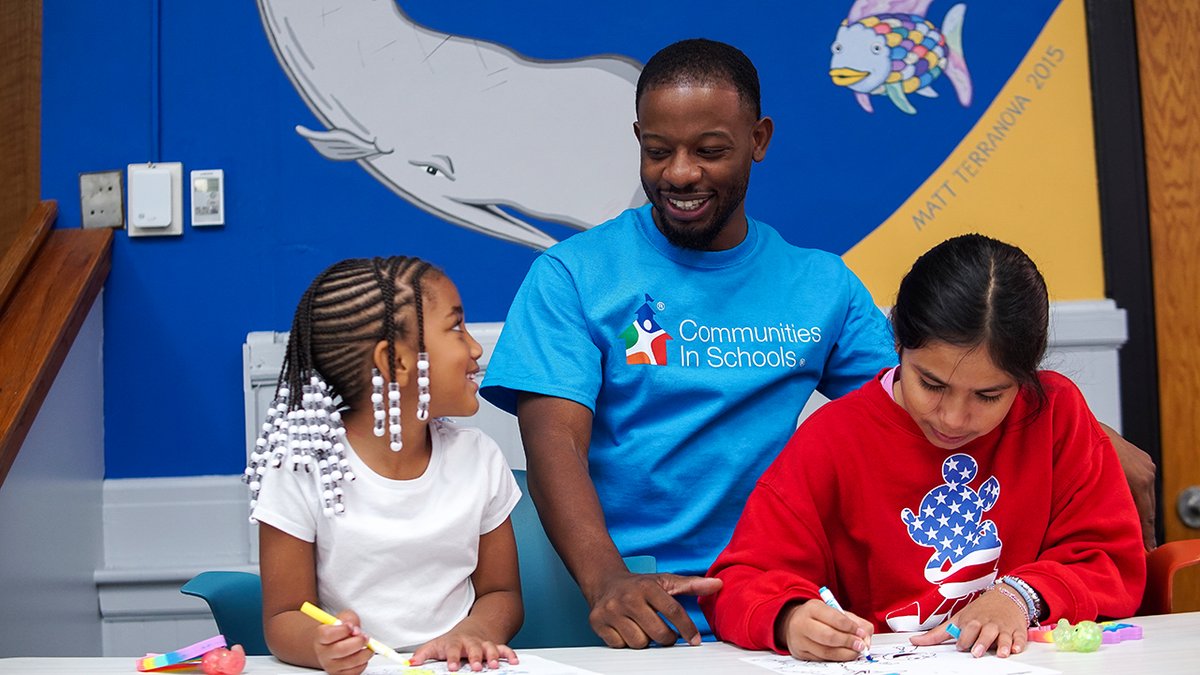
CIS Site Coordinator with Students

Study Overview

Authored by Benjamin Goldman, Assistant Professor of Economics and Public Policy at Cornell University, a Research Principal at Opportunity Insights and a former Linda G. Hammett Ory Fellow and current Research Affiliate at EdRedesign; and Jamie Gracie, a former Linda G. Hammett Ory Fellow and current Postdoctoral Fellow with EdRedesign and an Affiliate of Opportunity Insights, the working paper, “When Resources Meet Relationships: The Returns to Personalized Supports for Low-Income Students,” evaluates the impact of Communities In Schools integrated student supports model that places trained site coordinators in schools to connect students with whole-school and individualized supports such as tutoring, mentoring, nutrition, health services and housing supports that enable them to attend school regularly and succeed. 

The research examines both short-run academic outcomes for high-risk students—such as test scores, attendance, and discipline—and long-run outcomes, including high school graduation, college enrollment, and adult earnings, to assess the broader and lasting impacts of CIS.

The analysis uses data, including Census and federal tax records for children born between 1978 and 1992, as well as K–12 education records from Texas, where nearly half of CIS schools are located. 

Learn More

Key Findings on CIS Impact and Earnings Potential


$75,000

Lifetime Earnings Increase

Three years of CIS exposure—an investment by CIS of about $3,000 per student—is estimated to increase lifetime earnings by more than $75,000 ($36,000 in present day value).

$7,100

Additional Tax Revenue

Three years of CIS support—approximately $3,000 per student—generates $7,100 in additional lifetime federal tax revenue, yielding a $2.36 return for every dollar invested.

“The academic gains we observe from CIS programs are only one piece of the broader picture explaining improvements in graduation rates and earnings. CIS also helps keep students engaged in school and reduces adverse outcomes such as suspensions. These non-cognitive improvements are a key part of the program’s long-run impact.”
Benjamin Goldman Assistant Professor of Economics and Public Policy at Cornell University and Research Affiliate at EdRedesign
“The findings show that individualized, relationship-based programs that address students' academic and non-academic needs can significantly increase the success of our most at-risk students. By providing targeted supports, Communities In Schools helps better prepare students for the workforce and puts them on a path toward long-term self-sufficiency.”
Margaret Spellings Secretary of Education under President George W. Bush, now President and CEO of the Bipartisan Policy Center
“This research affirms what we witness every day: when you build authentic relationships with and connect students to the right resources, you transform the trajectory of their lives. We’re proud to offer a proven whole-school model that empowers students today and opens doors to opportunity for generations to come.”
Rey Saldaña President and CEO, Communities In Schools National
“We’ve long sought to close the academic and economic achievement gap for low-income students, effectively tackling intergenerational poverty. Personalized student supports is a cornerstone strategy that enables a full range of public and private services to connect with struggling young people through a relationship with a caring adult. It’s a scalable model that should be applied to any community or school district in America."
John King Secretary of Education under President Barack Obama, now Chancellor of the State University of New York (SUNY)
“Tackling intergenerational poverty is one of the great issues of our time and we're eager to facilitate collaborations between the nation's leading economic mobility researchers and place-based practitioners to answer big questions and understand what works along the cradle-to-career continuum."
Rob Watson EdRedesign Executive Director and Lecturer at Harvard Graduate School of Education
“This research offers practical guidance for programs and policies that aim to improve student outcomes and expand opportunity in communities where it has long been limited. Like other interventions we’ve studied—such as helping families move to higher opportunity areas—these findings underscore a critical insight: pairing social supports with traditional financial investments is key to driving impact. In this case, combining integrated student services and navigation with public school funding delivered substantial and lasting gains in both educational success and economic mobility."
Raj Chetty Director, Opportunity Insights, and Professor of Economics, Harvard University

Learn How We Show Up for Students

Communities In Schools helps students show up more often, engage in their learning, and succeed in school and beyond. Expanding CIS could close a significant share of the education and income gaps between high- and low-poverty schools—making it one of the most powerful levers for increasing opportunity and economic mobility for students.
Learn more about our approach and key elements of our model below. 
 

TOP

Keep in Touch

Sign up to receive our newsletter to stay up-to-date on the latest happenings at CIS National and across our network.